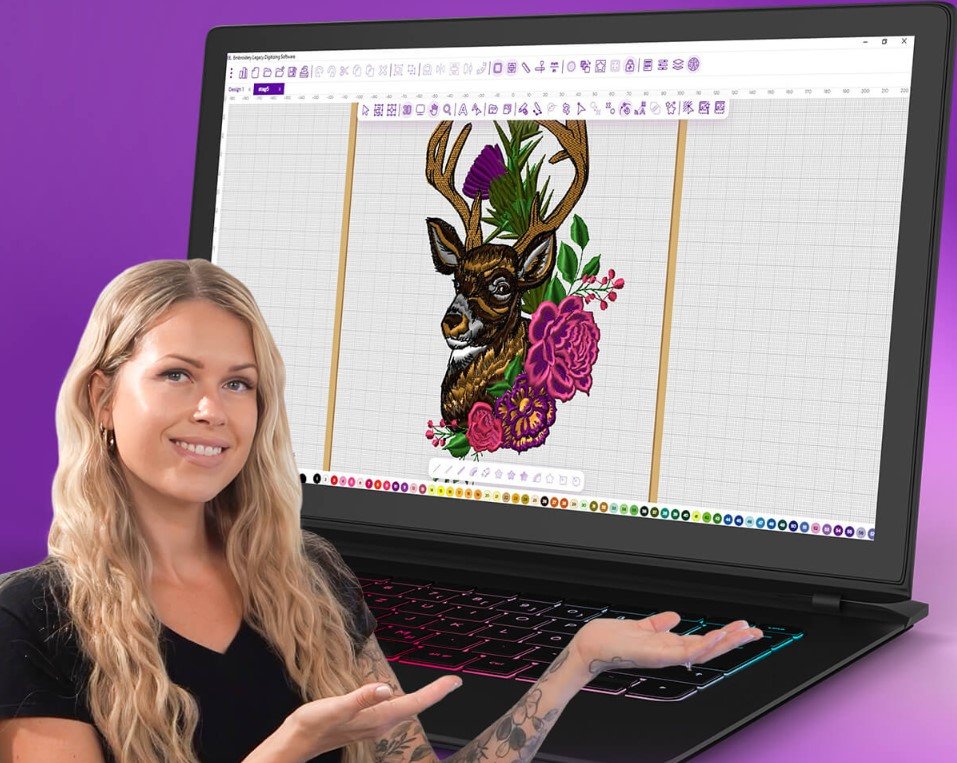
Why Embroidery Digitizing Is More Than a Skill—It’s a Creative Lifestyle
Picture this: a simple sketch on a napkin, a beloved pet’s photo, or a logo you designed yourself. Now, imagine it transformed into something you can touch, something woven into the very fabric of a hat, a bag, or a favorite jacket. This is the magic bridge that spans the digital and the tactile, built stitch by digital stitch. It’s a process that starts on a screen and finishes with the hum of a machine, and it’s known as embroidery digitizing.
But calling it just a “technical skill” is like calling a painter a “brush operator.” It’s accurate, but it misses the entire picture. For those who dive deep, embroidery digitizing evolves from a useful competency into a full-fledged creative lifestyle. It reshapes how you see the world, solve problems, and express yourself, one stitch file at a time.
The Mindset Shift: Seeing the World in Stitches
When you first start, digitizing is about learning software. You grapple with tools, stitch types, and file formats. You learn about density, underlay, and pull compensation. But something shifts with practice. You begin to look at the world through the lens of thread and fabric. You spot a gorgeous mural and don’t just admire the art—you mentally break it down. “That gradient would need a blend of three thread colors,” you think. “That intricate line work would require a delicate running stitch with careful stabilizer.” The everyday world becomes a potential catalog of designs, waiting to be interpreted. This new perspective is the first sign you’re not just performing a task; you’re adopting a unique way of seeing.
The Thrill of the Problem-Solving Puzzle
Let’s be honest: a huge part of this lifestyle is problem-solving, and it’s deeply satisfying. You have a complex logo with tiny, thin text. How do you make it stitch clearly without thread breaks? A customer wants a detailed portrait on a stretchy knit. How do you adjust density and underlay to prevent puckering? Each project is a creative puzzle where art meets engineering.
The process is rarely linear. You create a file, test stitch it on scrap fabric, analyze what went wrong (the thread tension, the jump stitches, the fill patterns), go back to the digital drawing board, and iterate. This cycle of create-test-refine is meditative in its own right. It demands patience, attention to detail, and a stubborn commitment to getting it right. The moment a troublesome design finally stitches out perfectly is a rush of accomplishment that fuels the entire lifestyle.
Building a Community, Not Just a Portfolio
Embracing digitizing as a lifestyle means you’re never truly alone in the process. Online, vibrant communities thrive on forums, social media groups, and video platforms. Here, the lifestyle aspect shines. People don’t just post perfect final products; they share the messy middle. They ask for help on a tricky satin stitch, they post photos of “stitch fails” for troubleshooting, and they celebrate each other’s breakthroughs.
This network becomes an essential part of your creative life. You learn from others’ mistakes, gain inspiration from their unique styles, and contribute your own hard-won knowledge. It’s a continuous exchange that turns an isolated hobby into a connected, collaborative experience. You’re part of a global guild of modern-day artisans who speak the same language of underlay and vector paths.
From Hobby to Personal Expression and Enterprise
For many, this lifestyle naturally expands its borders. What starts as personalizing your own gear grows into crafting deeply meaningful gifts—a digitized portrait of a family pet on a pillow, a favorite quote in an elegant font on a tote for a friend. Your digitizing becomes an extension of your care and thoughtfulness, a way to create heirlooms that can’t be bought in a store.
For others, the logical progression is toward a micro-enterprise. The ability to take a client’s idea and translate it into a physical, stitched product is a valuable service. You might find yourself digitizing logos for small businesses, creating custom designs for sports teams, or running an Etsy shop. The skill pays the bills, but the lifestyle fuels the passion that makes the business sustainable and enjoyable. You’re not just filling orders; you’re solving creative challenges for others and bringing their visions to life.
The Tangible Satisfaction of Making
In an increasingly digital and intangible world, embroidery digitizing grounds you in the physical. You spend hours on a screen, yes, but the ultimate payoff is profoundly real. It’s the sound of the machine running a file you built, the feel of the textured stitches under your fingers, and the visual impact of a design perfectly rendered in thread. This tangible result provides a sense of completion and pride that is often missing from purely digital pursuits. You haven’t just clicked “save”; you’ve made something.
It’s a practice that balances left-brain logic with right-brain artistry, screen time with hands-on creation, and solitary focus with communal sharing.
Conclusion: Weaving a Life of Thread and Pixel
Embroidery digitizing, at its core, is more than a technical process of converting images to stitch commands. It is a lifestyle defined by a particular mindset—a blend of artistic vision, analytical problem-solving, and communal learning. It changes how you interact with the world, turning everyday visuals into potential projects and challenges into satisfying puzzles.
It connects you to a community, provides a pathway for personal expression and entrepreneurship, and delivers the irreplaceable joy of creating something tangible. So, the next time you sit down to tackle a tricky PES file, remember you’re not just adjusting settings. You’re engaging in a modern craft, participating in a creative tradition that weaves together the digital age and the timeless human desire to make a mark, one perfectly placed stitch at a time.


Post Comment